——从光学数字模型到几何光学“场”:现代光学模拟的统一方法
From Optical Digital Twins to Geometrical Optics for Fields: A Unified Approach to Modern Optical Simulation
时间地点
时 间:2026年10月14日(星期三)14:00-16:00
地 点:长春理工大学东区第一教学楼西配楼,东1西102教室
报告专家:Frank Wyrowski教授|德国LightTrans International 公司 、耶拿大学
费 用:免费
专家简介
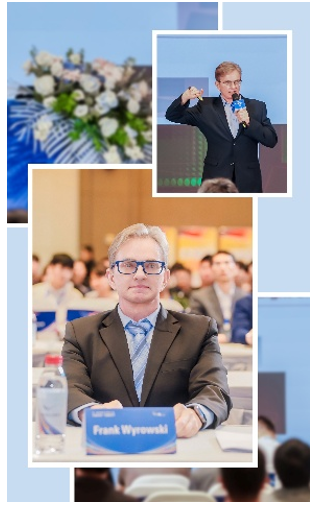 |
Frank Wyrowski教授是光学软件领域的先锋企业家与思想领袖。他是 LightTrans International GmbH(1999 年)和 Wyrowski Photonics GmbH(2014 年)的联合创始人,现任 LightTrans 总裁、Wyrowski Photonics 首席技术官。他的愿景是构建一个面向光学的一体化虚拟实验室,该实验室以光学数字模型为基础——对光源、元件与探测器进行数字化复刻,精准复现真实器件的各项特性。这一理念支撑了 VirtualLab Fusion 的开发,在他的推动下,该软件正朝着顶尖的光之数字模型平台不断发展。Frank Wyrowski 教授长期与耶拿大学保持学术合作关系,并是国际光学与光子学学会(SPIE)会士。他已发表 100 余篇学术成果,并联合主编《Diffractive Optics for Industrial and Commercial Applications》。他同时也担任中国科学院与哈尔滨工业大学客座教授。 |
报告摘要:
现代光学系统集成了种类日益丰富的光学元件——透镜、自由曲面、衍射与超构表面、波导、光纤以及结构光。无论是光线追迹还是严格的麦克斯韦求解器,没有任何单一仿真方法能够覆盖所有元件。本讲座介绍一种基于光学数字模型(Optical Digital Twin)的统一方法:每个元件都有其量身定制的仿真模型,而所有数字模型都通过一种共同语言——电磁场来进行通信。
核心理论挑战在于几何光学与物理光学的无缝结合。我们将展示如何按照Born & Wolf的经典理论思路,为电磁场建立几何光学的表述,以及这如何实现一种统一的传播方案:在需要处精确地包含衍射,而在几何传播合理之处不牺牲其速度。
在此基础上,我们将深入探讨超构表面,讨论如何对局部超构原子建模、如何在局部应用如 RCWA 等严格方法,以及如何将超构透镜与传统折射光学组合仿真。最后,我们将延伸至激光材料加工中的逆向设计,展示如何由焦区所需的场分布推导出空间光调制器(SLM)或光束整形元件所需的相位分布。
本讲座旨在引导一种关于光学仿真的思维方式:将光学元件的多样性不视为问题,而视为优势——由共同的物理基础所支撑。
Modern optical systems combine an ever-growing diversity of assets—lenses, freeform surfaces, diffractive and metasurfaces, waveguides, fibers, and structured light sources. No single simulation method, whether ray tracing or a rigorous Maxwell solver, can cover them all. This lecture presents a unified approach based on Optical Digital Twins: each asset carries its own tailored simulation model, and all twins communicate through a common language—electromagnetic fields.
The central theoretical challenge is the seamless combination of geometrical and physical optics. We will show how geometrical optics can be formulated for electromagnetic fields, following the classical insight of Born & Wolf, and how this enables a unified propagation scheme in which diffraction is included exactly where it is needed—without sacrificing the speed of geometrical propagation where it is justified.
Building on this foundation, we will take a deeper dive into metasurfaces, discussing how local meta-atoms are modeled, how rigorous methods such as RCWA are applied locally, and how metalenses can be simulated in combination with conventional refractive optics. Finally, we will explore an excursion into inverse design for laser material processing, showing how the desired field distribution in the focal region can be used to derive the required phase profile at the SLM or beam shaping component.
The lecture is intended as an introduction to a way of thinking about optical simulation that treats the growing diversity of optical assets not as a problem, but as a strength—enabled by a common physical foundation.
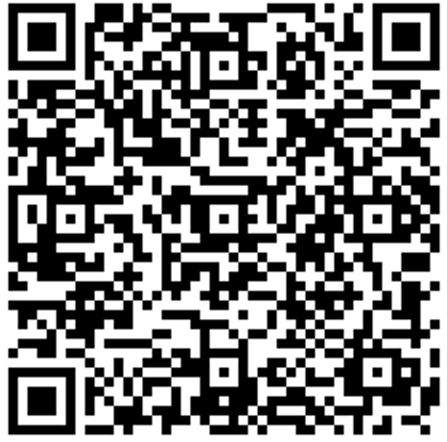
报名方式:
 |
 |
|
校外人员扫码报名 |
校内人员扫码报名 |
|